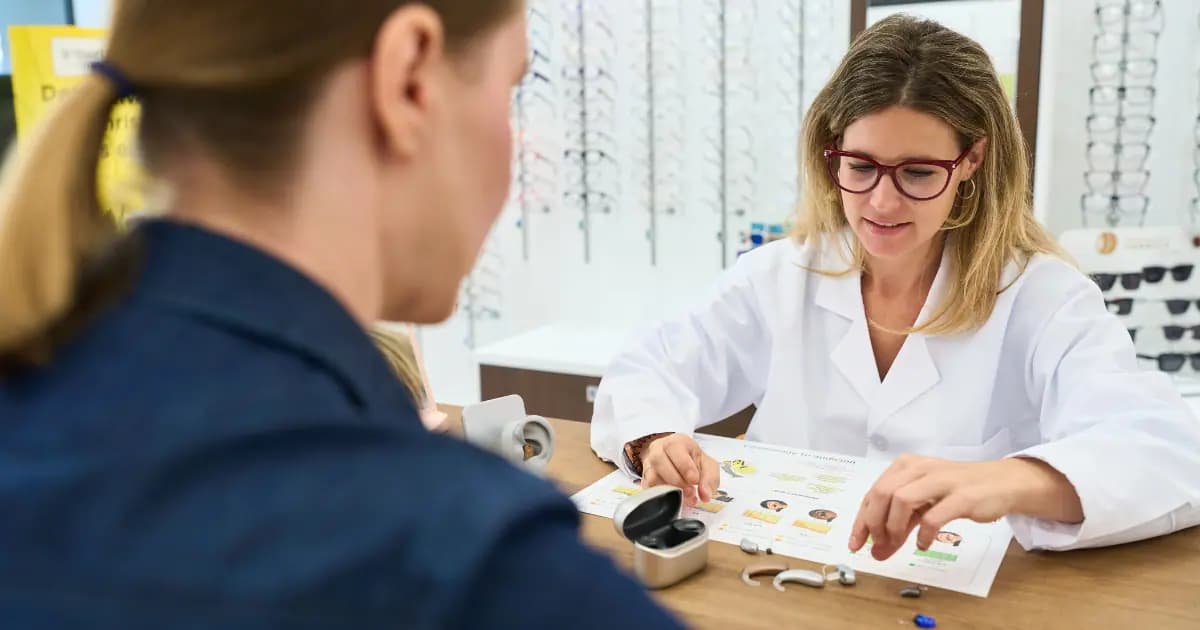

Hearing devices have become more accessible than ever. Online marketplaces, big-box stores, and television advertisements often promise affordable solutions that claim to improve hearing for a fraction of the cost of prescription hearing aids. While these products may seem appealing, many seniors quickly discover that lower prices often come with significant compromises.
At 3D Hearing, we frequently meet patients from Annapolis, Waldorf, Pasadena, Huntingtown, and surrounding Maryland communities who tried inexpensive hearing devices first. Many tell us the same story: the device made everything louder, but conversations were still difficult to understand.
Understanding why this happens can help you make a more informed decision about your hearing health.
The Difference Between Hearing Louder and Hearing Better
One of the biggest misconceptions is that all hearing devices work the same way.
Cheap hearing amplifiers and many basic over-the-counter (OTC) devices simply increase the volume of surrounding sounds. Unfortunately, hearing loss is rarely just a volume problem.
Many seniors experience difficulty understanding speech because certain pitches become harder to hear while others remain normal. This is especially noticeable in restaurants, family gatherings, or church services where background noise competes with conversations.
Prescription hearing aids are programmed to match your unique hearing loss after a comprehensive hearing evaluation. Instead of making every sound louder, they selectively amplify the frequencies you struggle to hear while reducing unwanted background noise.
Background Noise Is Where Cheap Devices Struggle
Many seniors say:
“I can hear people talking, but I can’t understand what they’re are saying.”
This common complaint is often called the “cocktail party effect.” The brain must separate speech from competing sounds, and hearing loss makes that process much harder.
Lower-cost hearing devices generally lack the sophisticated processing needed to distinguish voices from noise. As a result, dishes clanging, televisions, traffic, or restaurant chatter become just as loud as the conversation you’re trying to follow.
Modern prescription hearing aids from manufacturers like Oticon, Phonak, and Starkey use advanced directional microphones and intelligent sound processing that help emphasize speech while reducing distracting background sounds.
Research published in the Journal of the American Geriatrics Society has shown that untreated hearing loss is associated with increased communication difficulties and reduced participation in social activities, highlighting the importance of effective hearing treatment rather than simply making sounds louder.
Every Person’s Hearing Loss Is Different
No two hearing losses are identical.
One person may struggle with high-frequency sounds like children’s voices or birds singing, while another has difficulty hearing lower-pitched speech.
Cheap hearing devices use generic settings designed for the average user. Unfortunately, no one has an “average” hearing loss.
At 3D Hearing, we give every patient a comprehensive hearing test before making recommendations. This lets us program hearing aids to match each person’s hearing profile.
That personalized fitting often makes the difference between hearing more comfortably and becoming frustrated after only a few weeks.
Comfort Matters More Than Many People Expect
Many inexpensive devices are manufactured with limited sizing options.
This can create several problems:
- Poor fit inside the ear
- Whistling or feedback
- Ear discomfort after prolonged wear
- Devices that frequently fall out
Prescription hearing aids come in multiple styles and sizes to match both your ears and your lifestyle. A proper fit improves comfort and helps the technology perform as intended.
If you need adjustments later, your hearing care provider can make them easily.

You Don’t Receive Professional Support
Buying an inexpensive hearing device online usually ends after checkout.
If the sound isn’t right, you’re often left trying to adjust complicated settings yourself or dealing with limited customer service.
Professional care is one of the biggest advantages of choosing a local hearing provider.
At 3D Hearing, patients receive ongoing support that includes:
- Hearing evaluations
- Personalized programming
- Device adjustments
- Cleaning and maintenance
- Education on proper use
- Long-term follow-up appointments
This continuing relationship helps ensure your hearing aids continue working well as your hearing changes over time.
A study published in The Lancet identified hearing loss as one of the largest potentially modifiable risk factors for dementia, emphasizing the value of addressing hearing loss appropriately and early rather than delaying effective treatment.
Hidden Costs Can Make Cheap Devices More Expensive
The initial price tag may look attractive.
However, many people eventually replace inexpensive devices after discovering they do not meet their daily communication needs.
Some common hidden costs include:
- Buying multiple devices before finding one that works
- Limited warranties
- Short product lifespan
- Frequent battery replacements
- Lack of repair services
In many cases, investing in properly fitted prescription hearing aids provides better long-term value because they are designed for durability, adjustability, and ongoing professional support.
Prescription vs. OTC Hearing Aids
Over-the-counter hearing aids can be appropriate for some adults with perceived mild hearing loss.
However, they are not intended for everyone.
Prescription hearing aids are generally recommended when:
- Hearing loss is moderate or severe.
- Speech understanding is poor.
- Tinnitus is present.
- Hearing differs between ears.
- Balance concerns accompany hearing loss.
- Personalized adjustments are needed.
If you’re unsure which option is right for you, a comprehensive hearing evaluation provides answers before you spend money on devices that may not meet your needs.
Local Care Makes a Difference
National retailers and online sellers often provide limited ongoing care after purchase.
As a locally owned Maryland hearing practice, 3D Hearing focuses on building long-term relationships with patients, not simply selling hearing aids.
Whether you’re looking for hearing aids in Maryland, need a hearing test in Annapolis, or are searching for trusted senior hearing care in Waldorf, Pasadena, or Huntingtown, having an experienced local provider means you always have someone available when questions or adjustments arise.
That personal support often becomes just as valuable as the hearing aids themselves.
Research from the National Academies of Sciences, Engineering, and Medicine has emphasized that successful hearing care combines appropriate technology with professional evaluation, fitting, counseling, and follow-up services rather than relying solely on the device itself.

Choose Better Hearing, Not Just a Lower Price
Saving money matters, but hearing well is about more than finding the cheapest device available.
For many seniors, inexpensive hearing devices fail because they cannot adapt to individual hearing loss, perform poorly in noisy environments, and lack the professional support needed for long-term success.
At 3D Hearing, we help patients throughout Annapolis, Waldorf, Pasadena, Huntingtown, and nearby Maryland communities find hearing solutions that fit their hearing needs, lifestyle, and budget. We provide personalized care to help you stay connected with family, friends, and the activities you enjoy.
If you’ve been disappointed by a cheap hearing device or you’re exploring your options for the first time, visit https://www.3dhearing.com/ to schedule a comprehensive hearing evaluation and learn which solution is right for you.
Explore 3D Hearing